ADA Compliant Accessible Mobile Washrooms: Browsing Rental Compliance
Renting mobile bathrooms appears straightforward up until access enters the conversation, and it must go into the discussion every single time. For occasion coordinators, residential or commercial property managers, communities, and any individual setting up temporary hygiene, the question is not just whether a bathroom will certainly arrive in a timely manner and get serviced appropriately. The concern is whether individuals with disabilities can actually use it with self-respect, security, and independence.
That is where many otherwise mindful rental strategies fall apart. Somebody publications a bank of typical devices for a celebration, an institution fundraiser, a street fair, or a temporary public job, after that assumes the largest unit in the schedule counts as compliant. Or they bear in mind to get one ada portable toilet, however position it on soft ground, behind an aesthetic, or at the end of a narrow path that makes the device efficiently pointless. Theoretically, they attempted. In technique, accessibility failed.
The government framework that matters right here is the 2010 ADA Standards for Accessible Design, along with related analysis from the U.S. Accessibility Board and the Department of Justice. Those standards shape what counts as obtainable in the USA, including for portable toilet leasings in lots of public-facing settings. If you are organizing ada certified easily accessible portable bathrooms, the most safe state of mind is to believe past the system itself. Compliance is not a sticker on a door. It is the device, the course to it, the way it is recognized, and the way it functions for individuals who require it.
Where rental conformity typically gets misunderstood
A great deal of complication starts with the expression itself. People utilize terms like ada certified portable bathroom, ada-compliant mobile bathroom, mobility device system, handicap portable, and oversized toilet as if they all imply the very same point. They do not. A roomy portable toilet is not instantly an obtainable one. An ada handicap available mobile bathroom has to satisfy accessibility demands, not just provide added interior space.
Another point of confusion is the count. When mobile single-user toilet units are grouped together in a cluster, at least 5 percent of the systems in that collection should be accessible. The Accessibility Board has explained that this expectation applies even at temporary events. That matters because numerous occupants assume short-term methods exempt. It does not, at least not in the means individuals typically hope.
The expression "at the very least 5 percent" appears straightforward, yet in the field it often tends to raise immediate planning questions. If you are buying a tiny collection, you do not round your responsibility down to absolutely no in spirit. You prepare very early and ask the rental provider straight inquiries regarding just how they handle accessibility scoping. The earlier this takes place, the simpler it is to position the units properly and avoid a late scramble.
There is also a narrow however crucial distinction involving building and construction websites. The older 1991 requirement acknowledged an exception for portable toilet units at building sites when those devices are used specifically by building personnel. That limited point gets repeated out of context all the time. It does not clean away ease of access commitments for basic mobile toilet services offering the public, event participants, clients, renters, or mixed users. If the rental serves a more comprehensive audience, you ought to not rely upon that construction-only concept as cover.
The mobile restroom is only component of the conformity picture
One of the most common blunders I see in availability planning is treating the system as the whole answer. It is not. You can lease a legitimate ada compliant portable commode and still develop an inaccessible restroom area through bad placement.
The device must get on an accessible path. The entry needs to be accessible. If ramps or landings are required, those features likewise need to abide by the applicable ADA technological requirements. That implies a company can not just go down an easily accessible unit in a place that needs customers to go across mud, navigate deep crushed rock, press with barriers, or method from a steep improvisated plywood ramp and call it good.
This is where rental compliance comes to be useful instead of theoretical. The questions you ask prior to shipment commonly matter greater than the label printed in the sales order. Where exactly will the unit rest? Just how will somebody reach it from parking, sidewalks, gathering areas, or the event entry? Will the surface keep secure if it rainfalls? Is there sufficient clear method room as soon as fencing, generators, dumpsters, or crowd control barriers go in?
These details issue due to the fact that ease of access standards do not quit at the limit. An easily accessible portable toilet that can only be gotten to by an inaccessible path does not fix the problem. It promotes incorporation while delivering exclusion, which is commonly even worse than an obvious oversight since it tells customers their demands were considered when they were not.
What makes a portable unit accessible
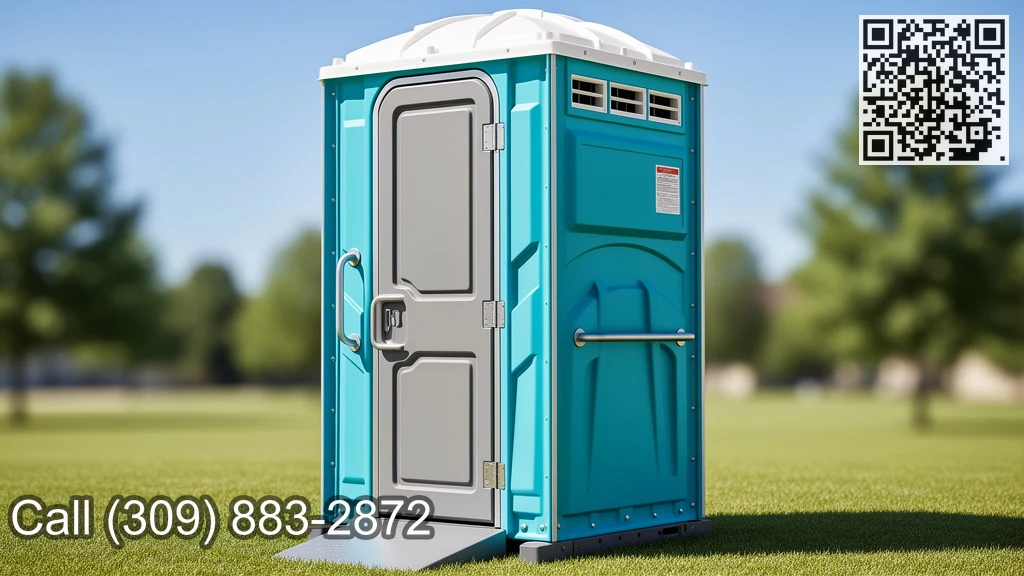
The technical requirements for accessible bathroom spaces still relate to mobile units. The unit needs to fit called for clearances, transforming area, and door maneuvering clearances. It also needs to comply with applicable regulations for grab bars and water storage room clearances. The functional takeaway is simple: if a supplier can not discuss how their accessible device is made to fulfill those useful demands, you need to keep asking questions.
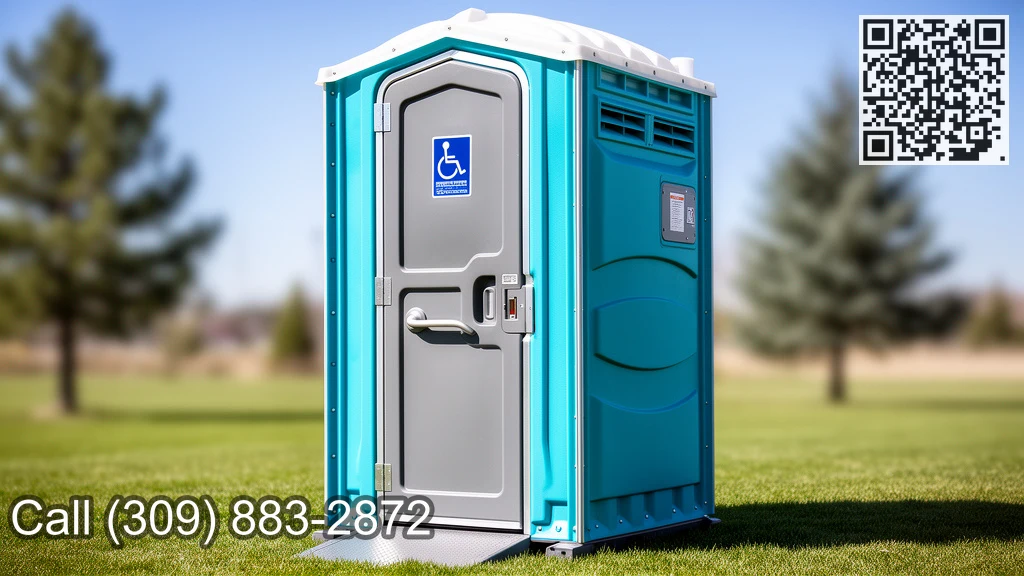
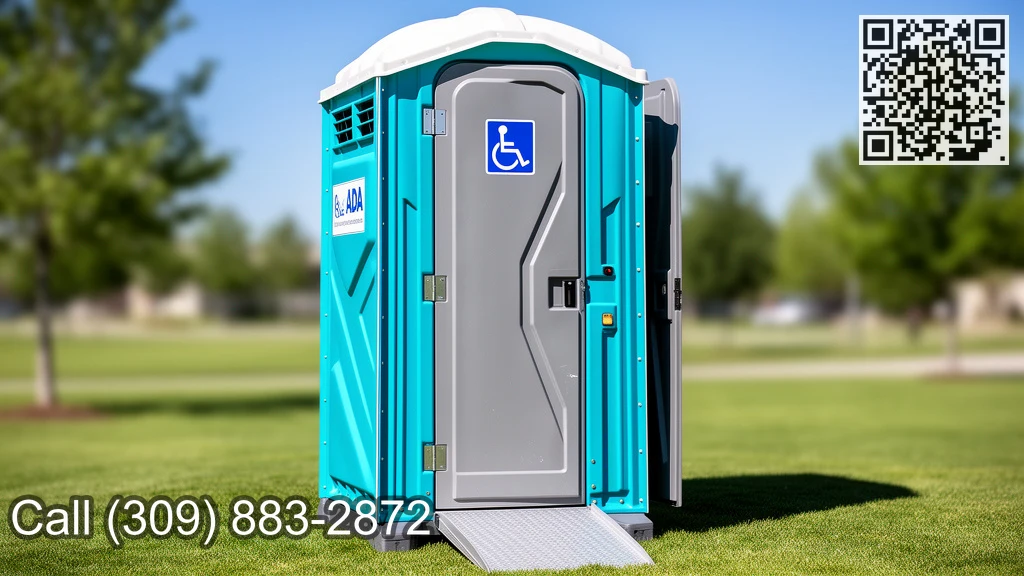
The other visible requirement is recognition. Easily accessible mobile toilet units have to be noted with the International Sign of Availability. That symbol is not decorative. It aids users situate the correct system without guesswork, and it indicates that the system is intended to fulfill accessibility standards instead of simply offer additional room.
I have actually seen coordinators focus greatly on aesthetic appeals, especially at wedding events, high end exterior occasions, and branded activations. They worry that access markings or a larger system will look out of area. That instinct is understandable, but it is the wrong top priority. If appearance problems start driving washroom placement or option, accessibility usually experiences first. Individuals notice when a bathroom location is bothersome. They keep in mind when it is unusable.
Temporary occasion does not mean momentary obligation
Some of the hardest discussions happen with organizers preparing short-duration occasions. They might just require bathrooms for someday, one weekend break, or one evening, so they presume the compliance burden have to be lighter. But the expectation for accessible units in portable single-user collections still uses at temporary events.
That point is worth resting with for a moment. A music celebration that lasts eight hours, a church picnic, an area parade staging area, or a midtown vendor market might all really feel casual compared with a long-term structure. From the user's perspective, however, the requirement is immediate and very genuine. If a person attends your event and can not make use of the bathroom since the only obtainable choice is missing out on or inadequately put, the short-term nature of the event does not soften the impact.
Short events additionally have a method of magnifying blunders. Permanent sites often have backup alternatives close by. Temporary websites frequently do not. If the ada available portable bathroom is obstructed by catering tools, parked too near to a fencing, or set on a course that becomes impassable after rain, there may be no practical alternative.
The most safe questions to ask prior to you sign the rental order
Most compliance troubles turn up prior to delivery, also if they are not recognized until much later. A brief preparation conversation can avoid a lot of costly solutions and uncomfortable apologies.
Here are the questions I would certainly ask any kind of portable restroom vendor or website team:
- How several units remain in the collection, and the number of of those are accessible?
- Is the available device plainly identified with the International Icon of Accessibility?
- What site conditions are needed for an available route and entryway to work properly?
- If the placement requires ramps or touchdowns, that is in charge of seeing to it those elements satisfy ADA requirements?
- Can the device be placed so door maneuvering room and strategy are not obstructed by other tools or fencing?
That listing is short on purpose. You do not need a legal workshop to detect risk. You require sufficient clearness to recognize whether the company recognizes accessibility as a genuine functional requirement, not an optional add-on.
Why website design can quietly undermine an or else certified rental
A rental agreement may correctly include ada certified mobile bathrooms, yet the final setup can still fall short individuals because the website evolved after the order was put. This occurs regularly than people confess. An occasion map obtains changed. A food truck row expands. Safety and security fence shifts. A sponsor camping tent asserts the flatter area of sidewalk. Then the restroom bank obtains pushed into the remaining space.
The leftover room is typically the worst feasible area for accessibility.
I bear in mind a short-lived configuration where the easily accessible system itself was fine, yet it had been placed near a small quality to maintain the main walkway looking clean. On paper, the format looked effective. Face to face, the path narrowed at an edge where stanchions had actually been included after the fact, and the landing area in front of the door became crowded with hand-sanitizer stands and trash bins. Nobody meant to produce a barrier. They merely kept making tiny choices that dealt with the accessible bathroom location as versatile space. By opening up time, accessibility had actually been jeopardized by a lots small changes.
That is why I constantly suggest planners to protect the restroom impact early. When the accessible device place is selected, defend the path and the navigating area around it as securely as you would protect an emergency exit or a fire lane. Access is not what remains after every person else gets their favored placement.
Compliance is broader than one policy cycle
It is additionally valuable to comprehend the larger environment around ADA responsibilities. Availability enforcement is not reducing. If anything, the broader conformity https://donovanyrvt189.northcrestbrief.com/posts/ada-mobile-toilet-needs-and-accessibility-identification-described environment has ended up being a lot more energetic across sectors. One recent example entailed Department of Justice assistance expanding a deadline for state and local government web and mobile ease of access policies into 2027 for bigger entities. That growth was not about mobile bathrooms, however it showed something essential: ADA compliance stays an online issue, and organizations ought to not expect availability responsibilities to fade right into the background.
Why does that matter for an ada mobile bathroom leasing? Due to the fact that it forms exactly how companies need to assume. Access should not be dealt with as a low-visibility information that only matters if someone whines. It belongs in routine planning, purchase, public interaction, and website operations. Portable sanitation is just one piece of that larger posture.
The language suppliers use, and what tenants ought to pay attention for
The bathroom rental sector uses familiar shorthand, and a few of it works. Terms like ada portable toilet or ada portable restroom can help recognize the kind of unit you require promptly. At the very same time, shorthand can hide gaps if nobody asks just what is being promised.
If a vendor states they have ada compliant mobile toilets available, ask what they indicate by certified. Ask whether the device is intended to please obtainable toilet-room needs, whether it is identified with the ease of access icon, and what problems must feed on website for the setup to stay accessible. An excellent vendor needs to not be annoyed by those questions. They need to await them.
This is specifically important when numerous parties are included. An occasion planner may purchase the systems, a venue may accept placement, a website specialist might prep the ground, and a different operations team might reposition neighboring tools the early morning of the event. In those scenarios, accessibility can fail the cracks since everybody thinks somebody else is taking care of it.
I have discovered that sentence can cut through the obscurity: "We require this arrangement to stay accessible from arrival with usage, not simply at shipment." That language tends to relocate the discussion from sales terminology to real-world function.
When counting units obtains tricky
The 5 percent policy for clusters seems neat, yet short-term sites are rarely cool. An usual gray area involves several washroom groups spread across a residential or commercial property. One collection might be near the major phase, one more by the entry, and another behind a supplier location. If they work as different clusters, you should assume meticulously about access at each place instead of thinking one easily accessible device somewhere on the property fixes every issue.
I am bewaring here since the realities provided support the 5 percent rule for each and every collection, and that is the trusted support. The useful lesson is to prevent a minimalist analysis. A single accessible device put away from where people really need one might please somebody's documents reaction while stopping working the spirit and likely the procedure of access. Where users go matters. Range matters. Course high quality matters.
This is likewise where compassion sharpens judgment. An individual using a wheelchair gadget ought to not need to leave one task location, traveling much further than everybody else, and browse a challenging path simply to reach the only functional toilet. If your configuration creates that experience, something regarding the planning likely requirements another look.
Construction sites are worthy of mindful distinction
Because portable commodes are so usual on task sites, people usually repeat partial information concerning construction exemptions. The essential distinction is slim: mobile toilet units at construction sites made use of solely by construction workers were discriminated under the cited 1991 basic scoping regulation. That does not produce a blanket exception for each mobile commode put near construction activity, and it does not remove commitments for public-facing short-lived washroom rentals.
This matters on mixed-use websites, phased growths, streetscape jobs, and civic renovations where building activity overlaps with public gain access to. If mobile units are offering visitors, customers, locals, or event attendees, you should not casually categorize them under a construction-only exception and go on. The individual populace matters.
When doubtful, caution is generally more affordable than improvement. Purchasing and properly placing an ada compliant portable commode from the beginning is simpler than safeguarding a slim reading of an exception after a complaint.
A couple of indicators that a rental strategy requires one more pass
Accessibility troubles frequently reveal themselves with average preparation language. If someone says, "We'll tuck the accessible unit out of the way," I stress. If the favored site is referred to as "close adequate" regardless of crushed rock, quality change, or blockage, I stress. If the plan relies upon an improvised ramp without clear duty for conformity, I worry.
The patterns are familiar:
- the obtainable system is purchased late, after the major format is already fixed
- the route is thought instead of strolled and tested
- nearby items are enabled to intrude on the entry or handling area
- signage and identification are dealt with as optional details
- the group puzzles a bigger device with a compliant one
None of these issues are uncommon, and none require bad intent. They generally come from rush, fragmented duty, or the presumption that short-term facilities can be managed casually. That is why accessibility planning works best when a single person has the concern from begin to finish.
What thoughtful compliance appears like in practice
Good rental compliance has a tendency to look unremarkable, which is precisely the factor. The available unit exists in the ideal percentage within the cluster. It is marked with the International Icon of Ease Of Access. The route to it is useful. The entryway functions. If ramps or landings are needed, they meet the pertinent requirements. The room around the device has actually not been squeezed by obstacles, decoration, or utility tools. Individuals who need the system can locate it and use it without having to ask for special help.
That kind of setup does not occur by crash. It originates from teams that comprehend a basic reality: availability is operational. It resides in choices about procurement, positioning, timing, supervision, and final changes.
There is also a human side to this that usually gets lost in conformity talk. For lots of customers, restroom access determines whether they can remain, participate, function, delight in an occasion, or really feel welcome in all. If the only ideal washroom is missing out on or unusable, people may need to leave early, limit fluid intake, depend upon buddies, or endure embarrassment that others never see. A compassionate technique to ada certified accessible mobile bathrooms starts there, with the lived reality behind the rule.
When you check out the rental with that lens, the concerns come to be clearer. Not "Did we get one?" yet "Can a person utilize it separately?" Not "Will this please the list?" yet "Would I be comfortable safeguarding this configuration to the person who depends on it?"
That is the level of treatment rental compliance is worthy of. The criteria develop the floor. Thoughtful preparation is what turns that floor into meaningful access.
 Ask ChatGPT
 Ask Grok
 Ask Perplexity
 Ask Claude
 Ask Google AI
 Ask You